
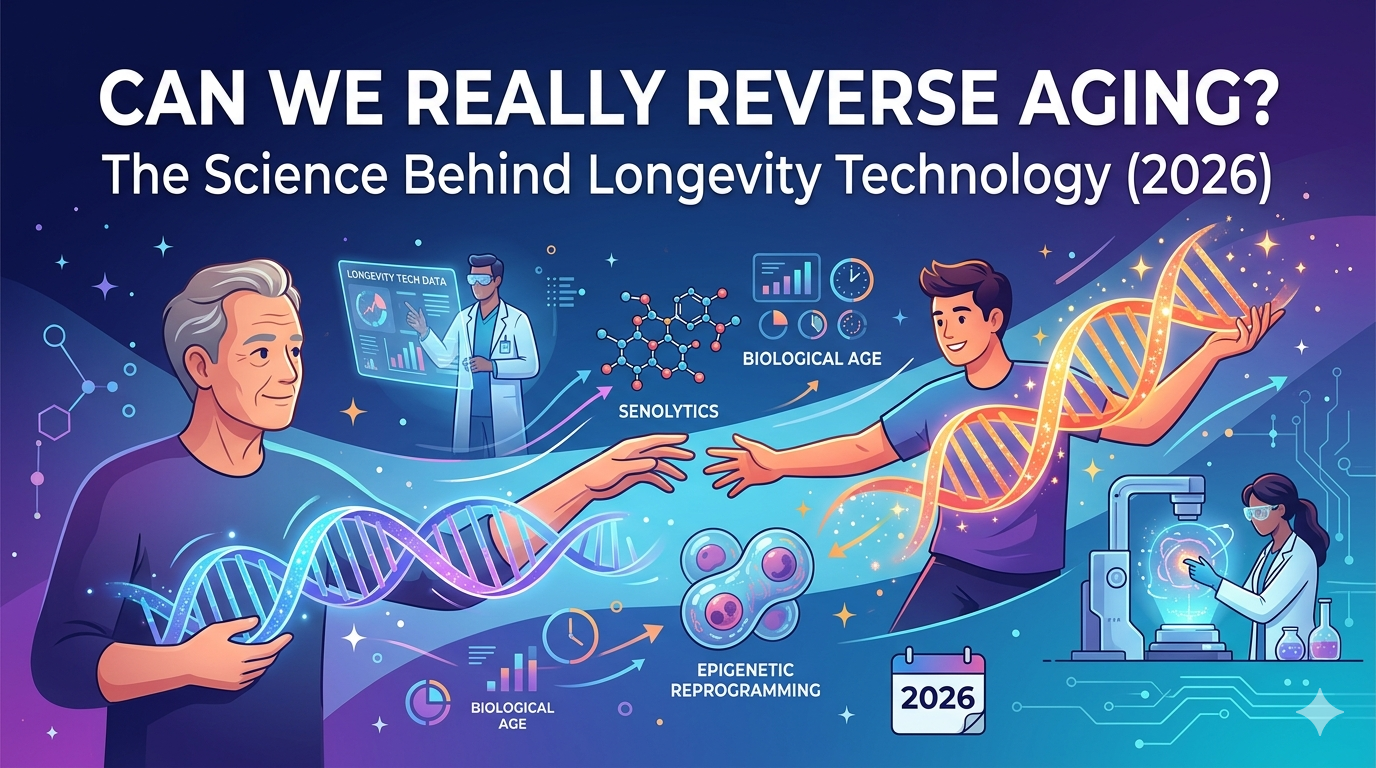
For centuries, humans have searched for the secret to eternal youth. From mythical fountains of youth to modern anti-aging creams, the desire to slow aging has always fascinated humanity. But in 2026, the question “can we reverse aging?” is no longer confined to fantasy. It has become a serious field of biomedical inquiry.
Instead, scientists today are asking how to live better, not just longer. They are asking whether aging itself can be slowed, paused, or even partially reversed.
With breakthroughs in gene therapy, cellular reprogramming, senolytics, and artificial intelligence-driven drug discovery, the concept of reversing biological aging is gaining real scientific attention. Billion-dollar companies and elite research institutions are investing heavily in technologies aimed at extending human healthspan.
But how much of this is real science, and how much is hype?
Let’s explore what modern research actually says.
Disclaimer: This article is for informational purposes only and is not a substitute for professional medical advice. Longevity supplements, gene therapies, and other interventions discussed here should not be pursued without consulting a qualified healthcare provider.
Can We Reverse Aging? What It Really Means
When people hear “reverse aging,” they often imagine becoming physically younger overnight. In science, however, reversing aging means something more specific: restoring biological systems to a more youthful functional state.
This may include:
- Repairing cellular damage
- Improving organ function
- Reducing biological age markers
- Rejuvenating tissues
- Slowing or reversing age-related decline
Importantly, scientists draw a clear distinction between chronological age, the number of years you have lived and biological age, which reflects how old your cells and tissues appear based on molecular biomarkers. Understanding the difference between biological age vs chronological age is fundamental to this entire field.
A person may be 50 chronologically but have a biological age closer to 40 or 60 depending on genetics, lifestyle, and overall health.
Why Do We Age — And Can We Reverse Aging?
Rather, aging is not caused by one single process. Instead, it results from multiple biological changes accumulating over time.
Scientists commonly refer to the hallmarks of aging, which include:
- DNA damage accumulation
- Cellular senescence
- Mitochondrial dysfunction
- Telomere shortening
- Stem cell exhaustion
- Epigenetic alterations
- Chronic inflammation: This same inflammatory process shows up elsewhere in the body too — chronic inflammation is also increasingly linked to gut health, suggesting aging and inflammation are deeply interconnected systems, not isolated processes.
- Protein misfolding
Together, these interconnected mechanisms gradually reduce the body’s ability to repair itself, and together they define the biological landscape that longevity science is working to address.
The Most Promising Longevity Technologies in 2026
1. Epigenetic Reprogramming: The Most Exciting Frontier in Aging Science
Put simply, epigenetic reprogramming involves resetting aged cells to a younger biological state by altering how genes are expressed without changing the underlying DNA sequence itself.
Scientists discovered that certain proteins, often called Yamanaka factors can partially “reprogram” cells, restoring youthful cellular behavior without fully converting them into stem cells.
Animal studies have shown remarkable results:
- Reversal of age-related vision loss
- Improved tissue regeneration
- Extended lifespan in mice
- Restoration of youthful cellular markers
As of 2026, some of the first human trials for epigenetic reprogramming therapies are now underway. Many researchers believe this may become one of the most powerful tools in anti-aging medicine over the next decade.
2. Senolytics: Clearing Senescent “Zombie” Cells
In fact, as we age, the body accumulates senescent cells — damaged cells that stop dividing but refuse to die. These so-called zombie cells promote chronic inflammation, damage nearby healthy tissue, and actively accelerate the aging process.
In practice, senolytic drugs work by selectively targeting and clearing these harmful cells from the body.
Potential benefits seen in research include:
- Improved physical function in animal models
- Enhanced tissue repair and regeneration
- Reduced frailty markers
- Delayed progression of age-related disease
Senolytics remain experimental in humans, but are widely regarded as one of the most promising directions in longevity medicine today.
3. AI-Powered Drug Discovery for Aging
Artificial intelligence is dramatically accelerating anti-aging research. AI drug discovery for aging has moved from concept to active application, with models helping researchers analyze aging pathways, identify longevity genes, predict drug candidates, and repurpose existing medications — all in a fraction of the time traditional methods would require.
This compression of research timelines is meaningful: years of laboratory work can now be done in months, potentially bringing effective longevity therapies to clinical trials much sooner.
4. Gene Therapy for Age Reversal
Gene therapy allows scientists to modify cellular instructions directly. Researchers are exploring ways to repair damaged DNA pathways, enhance cellular repair genes, activate regenerative mechanisms, and deliver anti-aging proteins to aging tissues.
Several longevity-focused biotech companies are preparing gene therapies specifically designed to combat age-related degeneration, with early-stage trials beginning to show promise.
5. Regenerative Stem Cell Therapies
Similarly, stem cells hold significant potential for anti-aging medicine by regenerating damaged tissues and replacing aged cells. Potential applications include cartilage regeneration, skin rejuvenation, organ repair, and immune system restoration.
Though promising, stem cell anti-aging therapy is still in early stages, with much of the existing evidence coming from preclinical studies.
Reversing Aging in the Brain: What the Neuroscience Shows
When people ask, “can we reverse aging?”, they’re usually thinking about skin and cells — but some of the most striking results have come from the nervous system itself. In a landmark 2020 study, Harvard Medical School researchers used partial epigenetic reprogramming to restore vision in aged and glaucoma-damaged mice, regenerating optic nerve cells that had lost their ability to repair themselves — a rare demonstration of reversing age-related decline in part of the central nervous system. Senolytics are also being studied for their potential to clear senescent cells linked to neurodegenerative conditions like Alzheimer’s and Parkinson’s, since these ‘zombie cells’ contribute to the chronic brain inflammation seen in both diseases. It’s still early-stage research, but it suggests the same biological pathways driving longevity science could eventually help address cognitive decline — not just physical aging.
Can We Reverse Aging Today? The Honest Answer
Despite genuine scientific excitement, there is currently no clinically proven therapy that fully reverses aging in humans.
However, we can likely slow biological aging. Evidence suggests that certain interventions produce measurable improvements in biological age markers, including:
- Regular exercise
- Calorie control and metabolic health management
- Quality, consistent sleep
- Chronic stress reduction
- Specific supplements in verified deficiency contexts
Some studies have demonstrated meaningful reductions in biological age scores through sustained lifestyle changes, making these the most accessible and evidence-backed anti-aging strategies available right now.
Longevity Supplements and Reverse Aging Science: Hype vs. Reality
However, much of the anti-aging supplement industry outpaces the actual evidence, even as it continues to boom.
Supplements with some scientific support:
- Vitamin D (if clinically deficient)
- Omega-3 fatty acids
- Magnesium (if deficient)
- Protein supplementation in older adults
Overhyped or insufficiently proven:
- Many NAD+ boosters
- Resveratrol
- Most proprietary “anti-aging” supplement blends
- Experimental peptide stacks
Experts consistently caution that the longevity supplements market contains many products whose marketing claims far exceed current human clinical evidence.
The Biggest Challenges in Reversing Aging
1. Aging Is Biologically Complex
Overall, aging involves nearly every biological system simultaneously. Targeting one pathway may provide benefit but is unlikely to fully address the broader, systemic problem.
2. What Works in Mice Doesn’t Always Work in Humans
Many anti-aging interventions that extend lifespan in mice have failed in human translation. Human biology is vastly more complex, and this gap between animal and human results has repeatedly humbled the field.
3. Long-term Safety Remains Unknown
Manipulating aging pathways carries real potential risks, including increased cancer risk, immune dysfunction, organ overgrowth, and genetic instability. Long-term safety data is still largely absent from this rapidly evolving field.
Ethical and Social Questions
If aging can be meaningfully slowed or reversed, society will face profound challenges: who gets access, what happens to population growth, how do we restructure retirement and the workforce, and what does it mean to redefine old age entirely? These questions deserve as much serious attention as the science itself.
What Longevity Experts Actually Believe About Reversing Aging
Most leading researchers in longevity science agree on several key points:
- Aging is biologically modifiable
- Slowing aging is more realistic in the near term than complete reversal
- Human rejuvenation therapies are still experimental
- Significant open questions remain in nearly every area of aging biology
What You Can Do Right Now to Age Better
While futuristic therapies are still in development, the strongest anti-aging interventions available today are surprisingly accessible:
- Exercise regularly and consistently
- Prioritize quality sleep
- Maintain muscle mass as you age
- Keep blood sugar under control
- Eat nutrient-dense whole foods
- Avoid smoking and excess alcohol
In particular, these lifestyle habits have a direct, measurable influence on biological age — more than most current anti-aging supplements can currently claim.
The Future of Longevity Medicine: Can We Reverse Aging Sooner Than We Think?
As research accelerates, the question of whether we can reverse aging is shifting from ‘if’ to ‘how soon’ — experts believe the next decade may bring personalized aging clocks, preventive anti-aging prescriptions, organ-specific rejuvenation therapies, and combination longevity protocols tailored to individual biology. Longevity medicine is transitioning from the fringe of wellness into a legitimate and rapidly growing branch of medical science.
Final Thoughts: Can We Reverse Aging Yet?
The idea of reversing aging is no longer confined to science fiction. Modern longevity research is revealing that aging may be far more biologically flexible than previously believed.
While full biological age reversal in humans remains unproven, real progress is being made. Technologies like epigenetic reprogramming, senolytics, AI-powered drug discovery, and regenerative stem cell therapies suggest that the future of healthcare may focus not just on treating disease but on treating aging itself.
Still, caution is warranted. Many commercial anti-aging claims continue to far exceed current evidence. The science is genuinely promising, but we are still in the early chapters of this revolution.
The future may not bring immortality but it may bring longer, healthier, and more youthful lives than any previous generation has ever known.
Frequently Asked Questions
Not fully, as of 2026. There is currently no clinically proven therapy that completely reverses aging in humans. However, research into epigenetic reprogramming, senolytics, and gene therapy suggests that partially restoring youthful cellular function may become achievable in the near future.
Chronological age is simply the number of years you have lived. Biological age reflects how old your cells, tissues, and organs appear based on molecular biomarkers. Two people with the same chronological age can have significantly different biological ages depending on genetics, lifestyle, and health history.
The hallmarks of aging are the core biological processes that drive age-related decline. They include DNA damage accumulation, cellular senescence, mitochondrial dysfunction, telomere shortening, stem cell exhaustion, epigenetic changes, chronic inflammation, and protein misfolding.
Senolytics are drugs designed to selectively remove senescent cells — damaged “zombie” cells that accumulate with age and drive inflammation. In animal studies, they have shown improved physical function and delayed disease progression. They are still experimental in humans, with clinical trials ongoing.
Most marketed longevity supplements lack strong evidence from controlled human trials. Vitamin D, omega-3s, and magnesium have some research support in the context of deficiency. Widely marketed products like NAD+ boosters and resveratrol have not yet demonstrated reliable anti-aging effects in well-designed human studies.
The strongest evidence-backed strategies are regular exercise, quality sleep, maintaining muscle mass, managing blood sugar, eating a nutrient-dense diet, and avoiding smoking and excessive alcohol. These lifestyle factors consistently show a greater impact on biological age than any supplement currently on the market.
References
- Molecular Mechanisms of Aging and Anti-Aging Strategies: https://link.springer.com/article/10.1186/s12964-024-01663-1
- Approaches Toward Longevity: Reprogramming and Senolysis: https://pmc.ncbi.nlm.nih.gov/articles/PMC6413205/
- What Science Says About Reverse Aging in 2026: https://www.superage.app/en/blog/can-you-reverse-aging-science-2026/
- Longevity Startup Advances Anti-Aging Gene Therapy: https://longevitytoday.com/articles/david-sinclairs-life-biosciences-raises-80m-for-anti-aging-gene-therapy-trial-web-mnr46n7c
- AI Drug Discovery for Aging Hallmarks: https://arxiv.org/abs/2509.03330
- Longevity Market Development Report 2026: https://www.globenewswire.com/news-release/2026/02/18/3240035/28124/en/Longevity-Market-Report-2026-2036-Advances-in-AI-Genomics-and-Regenerative-Medicine-Are-Accelerating-Developments.html
- Experts on Longevity Supplements and Evidence: https://www.health.com/supplements-longevity-experts-recommend-11937799